VSI (Vertical Shaft Impact) Crushers: When You Actually Need One
VSI crushers are misunderstood. They are not 'just another impact crusher' — they solve specific problems no cone or HSI can. Here are the four buying triggers and the math behind the payback.
The VSI Is Not Just Another Impact Crusher
Plant operators often lump the VSI in with horizontal shaft impactors and assume the choice is about brand or budget. It is not. A vertical shaft impact crusher solves specific problems that neither a cone nor an HSI can address — and it solves them cheaply when applied correctly.
The VSI works on a different principle: rock is accelerated by a high-speed rotor and thrown against either a stationary anvil ring ("rock-on-steel") or against itself in a rock bed ("rock-on-rock"). The result is precise particle shaping rather than blunt size reduction.
Four Scenarios Where a VSI Pays Back in Months
1. Manufactured Sand (M-Sand)
If you produce concrete sand or asphalt sand from crushed rock, a VSI is the only practical machine that delivers a cubical fine aggregate at controlled fineness modulus. Cones cannot. HSIs over-produce fines.
2. Quartz, Feldspar, Silica Sand Refining
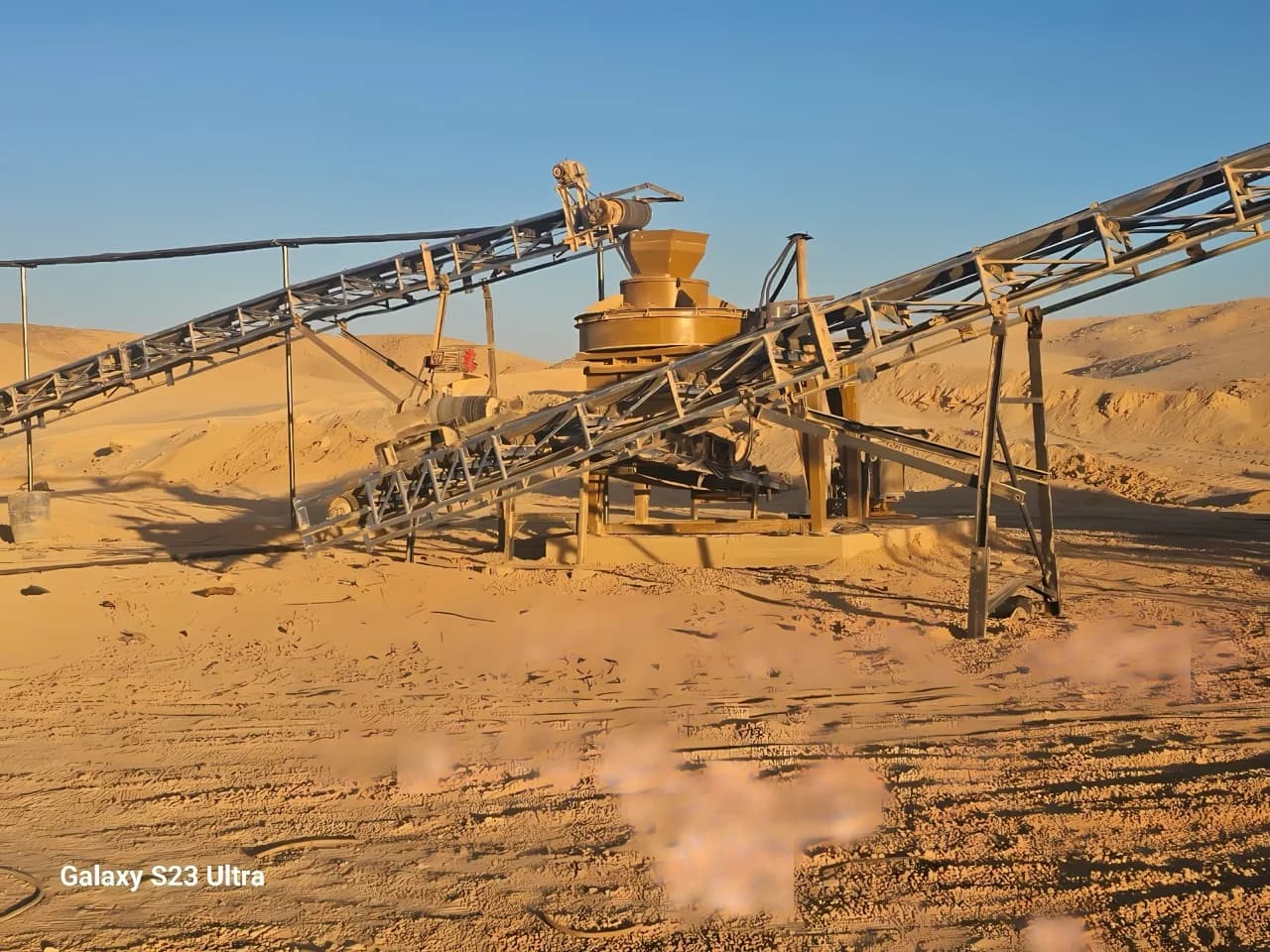
For glass-grade quartz or ceramic-grade feldspar you need rounded, uniform particles below 1 mm. The VSI in rock-on-rock mode produces this with minimal contamination from steel wear. We have installed VSIs at Egyptian quartz processors specifically for this stage.
3. Basalt and Hard Rock Aggregate Shape Correction
If your secondary cone is throwing flaky basalt or granite, a VSI in tertiary or quaternary position rounds the particles. This unlocks higher-margin asphalt contracts that specify shape index and flakiness limits.
4. Phosphate and Mineral Liberation
For some ores, the VSI's autogenous breakage liberates target minerals along grain boundaries with less over-grinding than a cone. Recovery in downstream flotation or magnetic separation goes up.
When NOT to Use a VSI
- Soft, sticky, or wet feed — material packs the rotor.
- You only need to reduce size, not shape it — a cone is cheaper.
- Top size feed > 60 mm in most VSIs — pre-crush first.
- Tramp metal in feed — rotor damage is expensive.
The Payback Math
For a 50 TPH M-sand operation, a VSI typically increases sellable sand price by 60–120 EGP/ton over unshaped product, while wear cost (rock-on-rock mode) stays under 8 EGP/ton. At 200 working days × 50 TPH × 80 EGP delta, that is 800,000 EGP/year of additional gross margin from one machine.
BARMAC: A Reference Worth Knowing
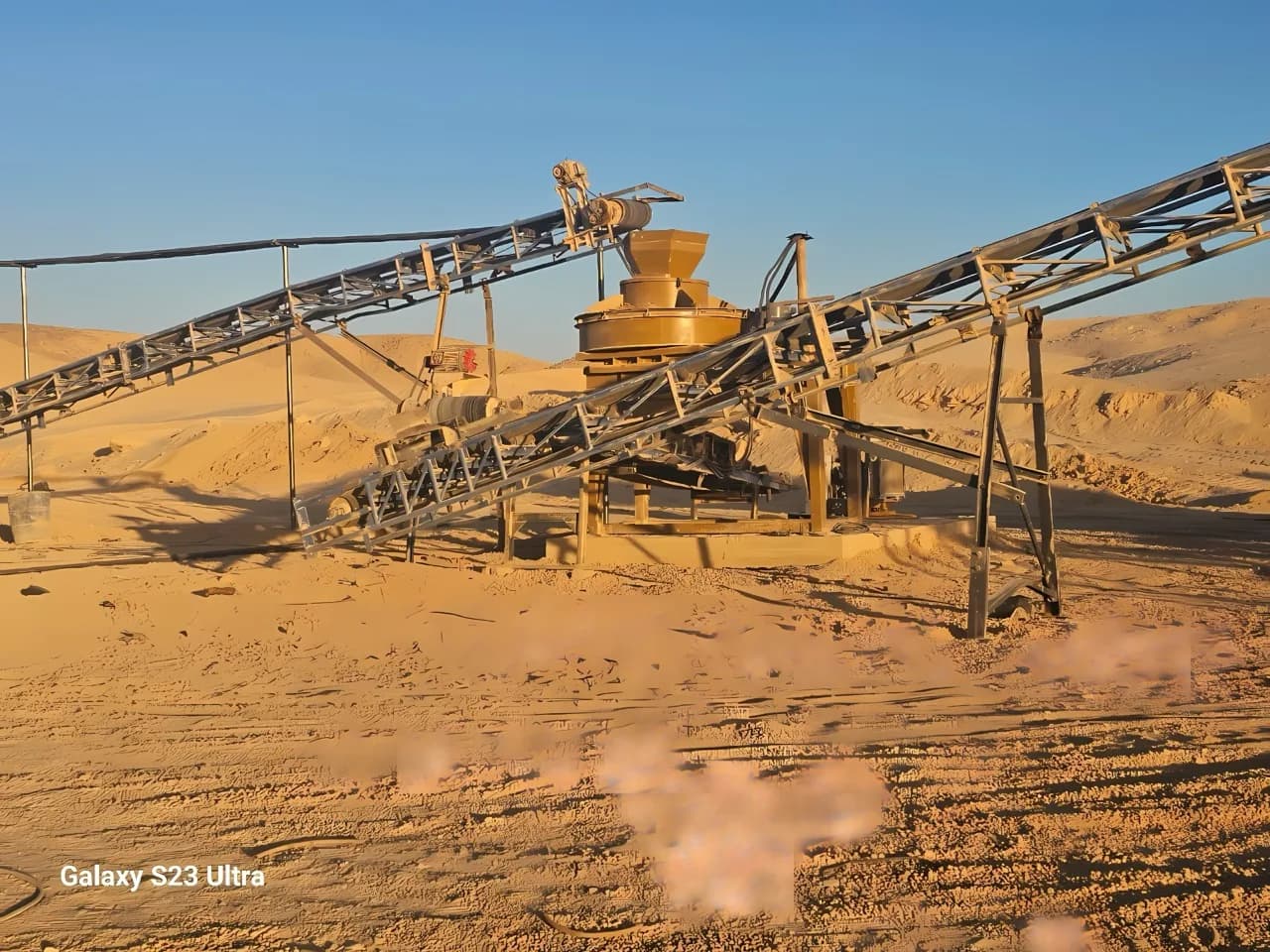
The BARMAC family of VSIs is the field reference in Egyptian quartz, phosphate, and aggregate plants. Pillar supplies BARMAC-style VSIs sized 30–250 TPH with rock-on-rock and rock-on-anvil configurations. Selection depends on feed hardness, target product, and contamination tolerance — we walk customers through this in a 30-minute scoping call.
Ready to Move Forward?
Pillar's engineering team has delivered turnkey crushing, screening, conveyor and asphalt solutions across Egypt — from Upper Egypt cement plants to Sinai phosphate operations. If you're sizing equipment for a new project, evaluating ROI, or upgrading existing capacity, we can help you spec the right system the first time.
Request a Quote → or call +20 107 067 0649.