Silica Sand for Glass Manufacturing: Quality Specs and Equipment Required
Glass manufacturers reject sand for one ppm of iron over the limit. The plant that produces glass-grade sand is not just "a sand washer" — it is a 7-step purification chain. Here is exactly what each step does.
Why Glass-Grade Sand Is a Different Product
Construction sand sells for 60–110 EGP/ton in Egypt. Glass-grade silica sand sells for 350–550 EGP/ton. The difference is purity — and purity is engineered, not lucky. Glass manufacturers test every shipment and reject loads with iron over a few hundred parts per million. A plant that cannot consistently hit spec gets struck off the supplier list permanently.
Glass-Grade Quality Specifications
| Property | Container Glass | Float Glass | Optical / Crystal |
|---|---|---|---|
| SiO2 | ≥98.5% | ≥99.5% | ≥99.9% |
| Fe2O3 | ≤500 ppm | ≤200 ppm | ≤50 ppm |
| Al2O3 | ≤2.0% | ≤0.5% | ≤0.2% |
| Gradation (top size) | ≤0.85 mm | ≤0.6 mm | ≤0.5 mm |
The 7-Step Equipment Chain
1. Primary and Secondary Crushing
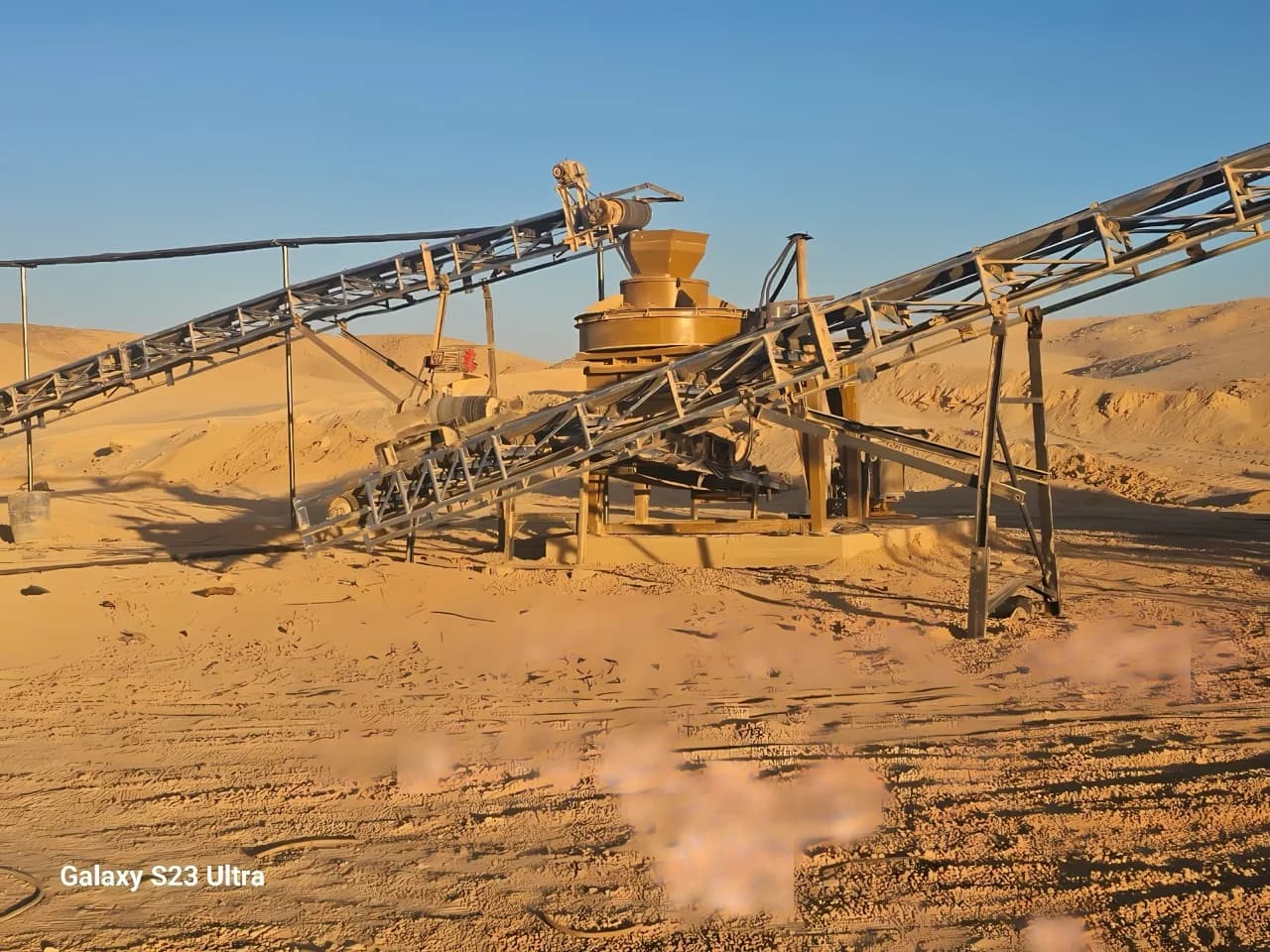
Quarried silica rock crushed in jaw and impact crushers to ≤8 mm.
2. Pre-Screening (Wet)
Vibrating screen with sprays separates >0.85 mm oversize for return crushing. Wet from the start because clay binders coat grains.
3. Attrition Scrubbing
High-speed attrition cells rub grains against each other to liberate surface contaminants (iron oxide coatings, clay films). This is the step most plants skimp on — and it is the step that decides Fe2O3.
4. Multi-Stage Hydrocyclone Classification
Hydrocyclones split the slurry into product (typically 100–600 micron), oversize (recycle), and slimes (reject).
5. Magnetic Separation
High-intensity wet magnetic separators (HIWMS) remove paramagnetic iron-bearing minerals. This is what gets you below 200 ppm Fe2O3.
6. Flotation (Optional, for Optical Grade)
Reverse flotation removes feldspar and remaining heavy minerals. Required for <50 ppm iron.
7. Dewatering, Drying, Bagging
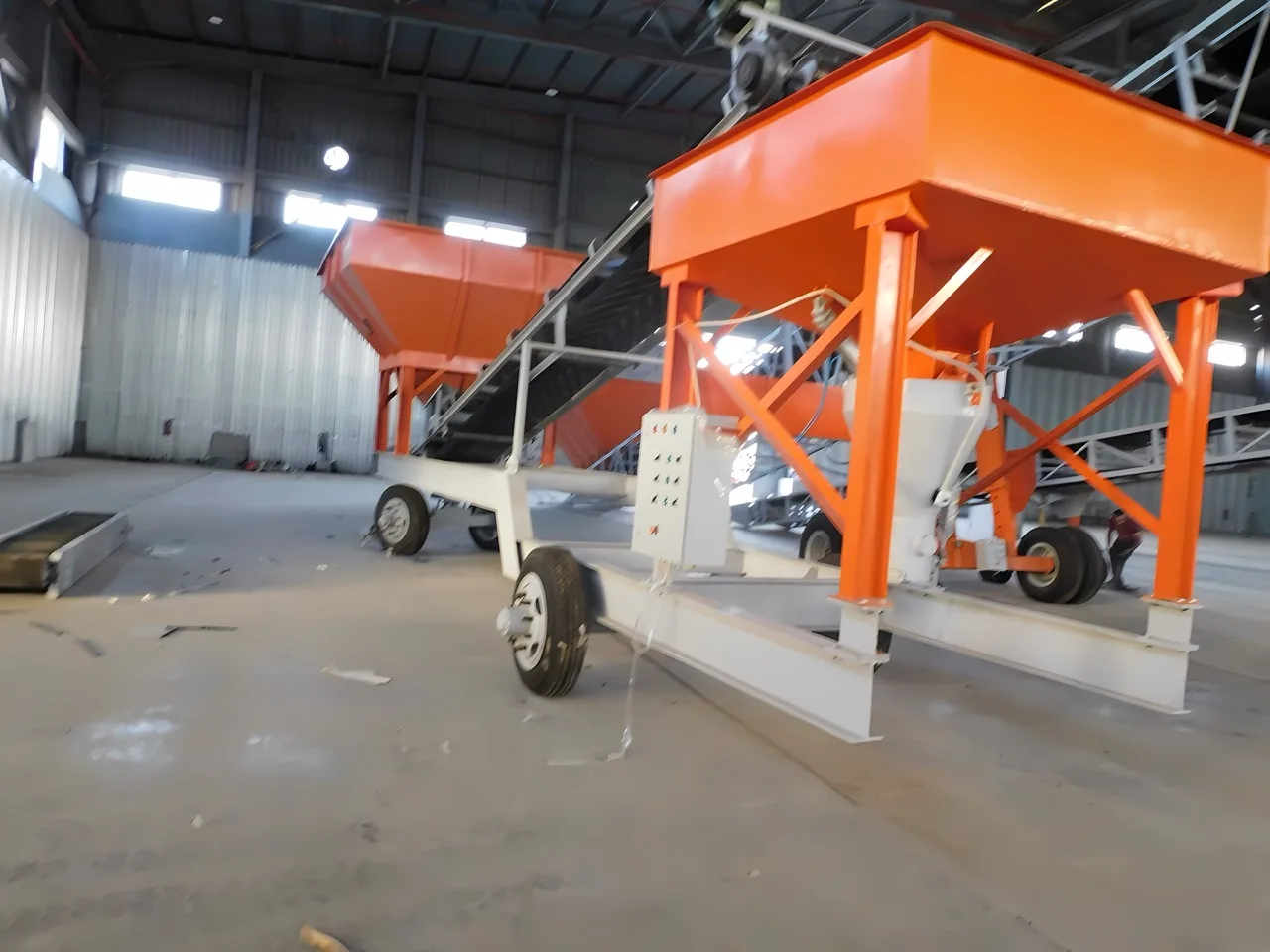
Spiral classifier or dewatering screen → fluidized bed dryer → 50 kg / jumbo bag filling station (PLC-controlled).
Equipment Capex for a 30 TPH Glass-Grade Plant
- Crushing and primary screening: 5 – 7 million EGP
- Wet screening, attrition cells: 4 – 6 million
- Hydrocyclones, classifiers: 3 – 5 million
- Magnetic separators: 6 – 9 million
- Flotation (if optical): +5 – 8 million
- Dewatering, drying, bagging: 4 – 7 million
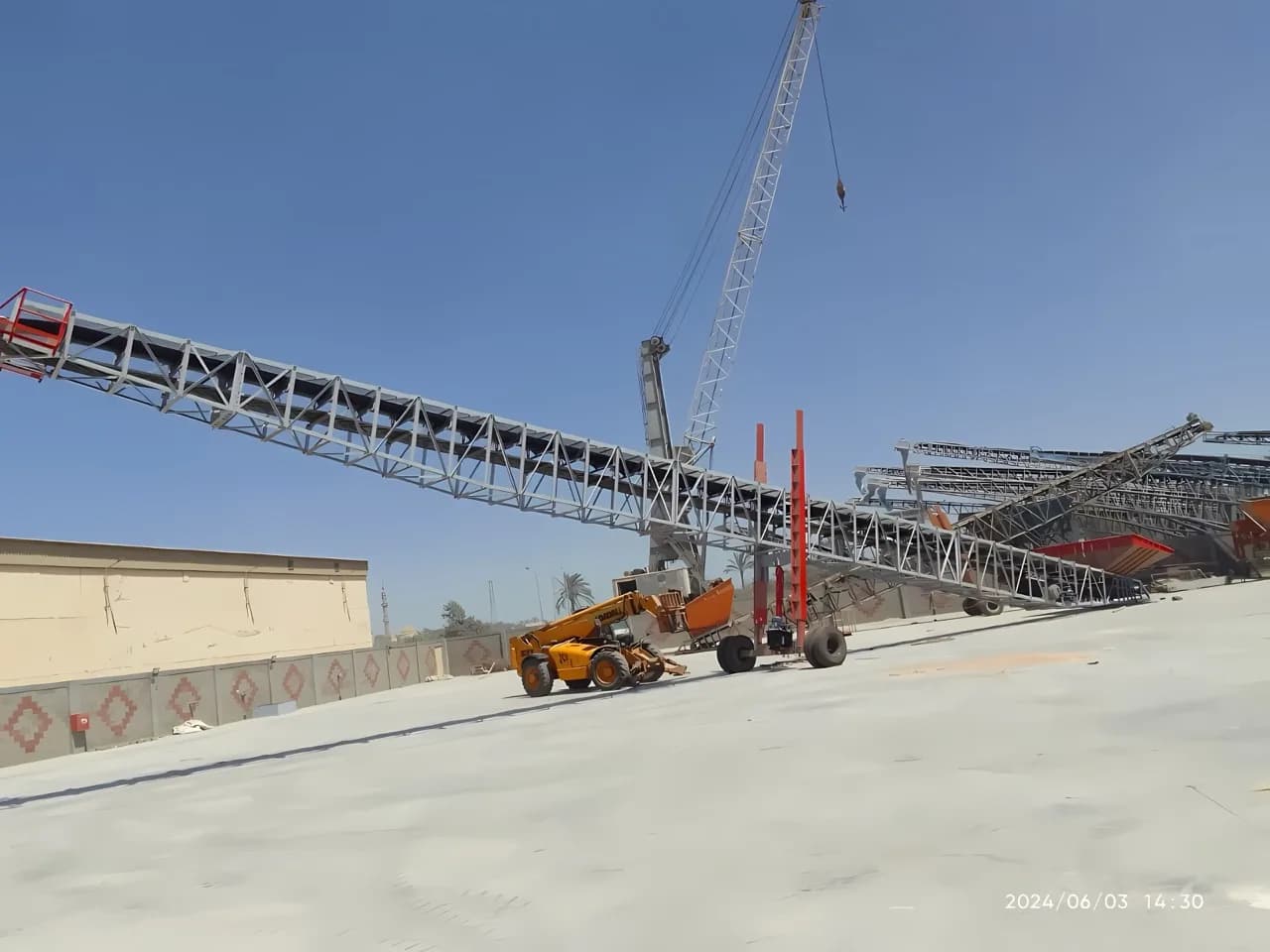
- Conveyors, structural, civil, electrical, controls: 6 – 10 million
- Total turnkey: 28 – 44 million EGP (without flotation)
The Two Mistakes That Lose Customers
- Skipping attrition scrubbing — you will hit gradation but never iron spec consistently.
- Cheap magnetic separators — low-intensity drum magnets do not catch fine paramagnetic iron. Spec HIWMS at 1.5+ Tesla for glass-grade.
Pillar's Silica Sand Capabilities
We have installed silica sand plants in Greater Cairo, including 80 TPH turnkey lines for major Egyptian silica sand producers. Pillar provides the full mechanical chain — crushing, screening, conveyors, classification, and PLC-controlled bag filling — and works with downstream magnetic and flotation specialists for optical-grade requirements.
Ready to Move Forward?
Pillar's engineering team has delivered turnkey crushing, screening, conveyor and asphalt solutions across Egypt — from Upper Egypt cement plants to Sinai phosphate operations. If you're sizing equipment for a new project, evaluating ROI, or upgrading existing capacity, we can help you spec the right system the first time.
Request a Quote → or call +20 107 067 0649.